Send the same coin or token to many addresses in a single multisend — one on-chain transaction covers up to 200 recipients.
Multisend pays out to many addresses at once. You paste a list of addresses and amounts, the dashboard estimates the fees, and it settles in as few transactions as possible.
One on-chain transaction covers up to 200 addresses. Larger lists are split automatically — 1,000 recipients run as 5 transactions, for example.
1
Open Multisend and pick the coin and wallet
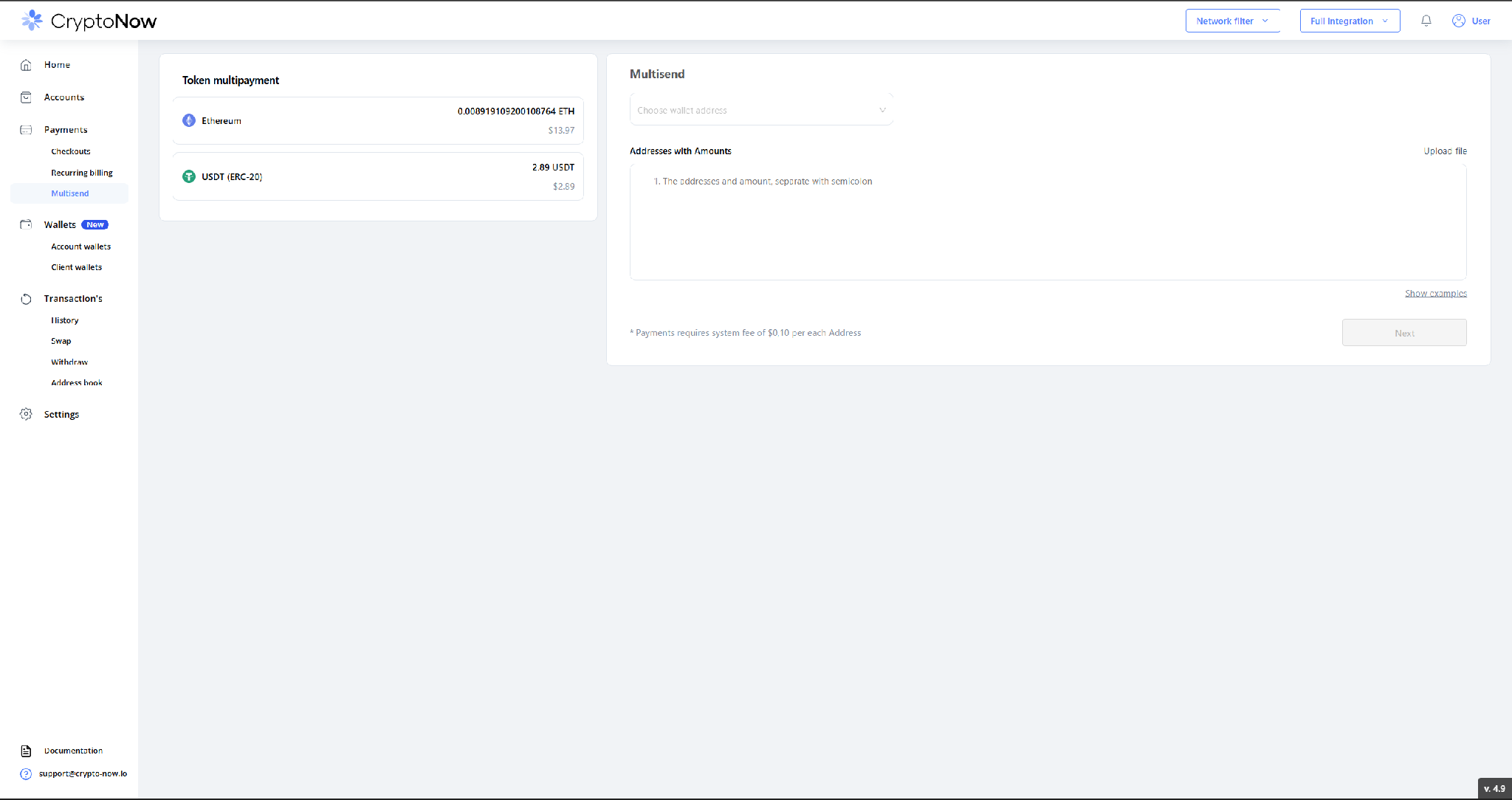
Go to Payments → Multisend. On the left, Token multipayment lists what each wallet holds — select the coin or token to send. Then choose the source wallet in the Multisend panel.
Multisend — pick the coin and the source wallet
2
Enter recipients
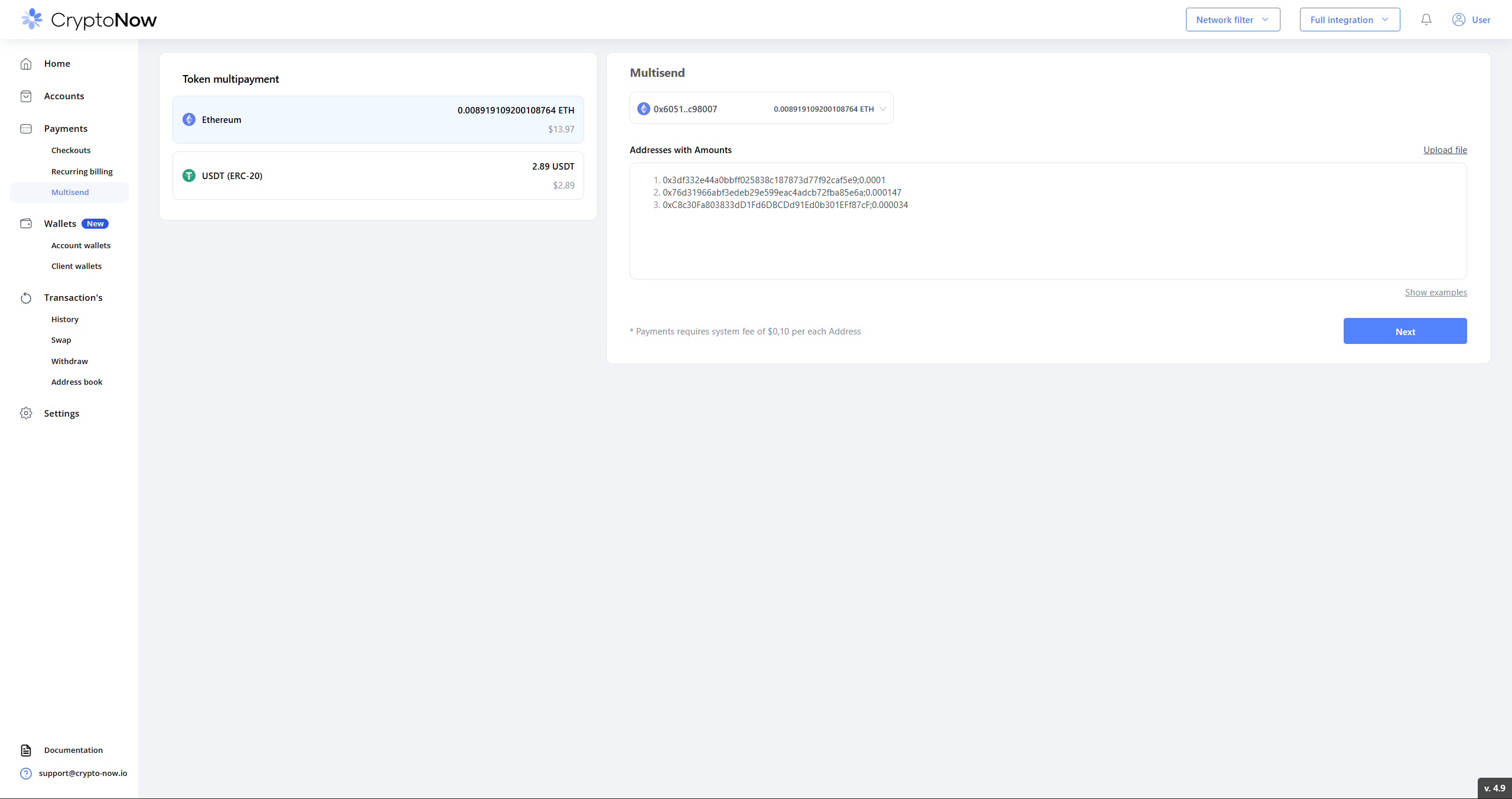
In Addresses with Amounts, add one recipient per line as address;amount (address and amount separated by a semicolon). For long lists, use Upload file with a .csv. Show examples demonstrates the correct format.
One recipient per line: address;amount
The footer states the System Fee directly: $0.10 per address. Duplicate addresses can be merged or kept, depending on the option you pick.
3
Confirm the fee estimate
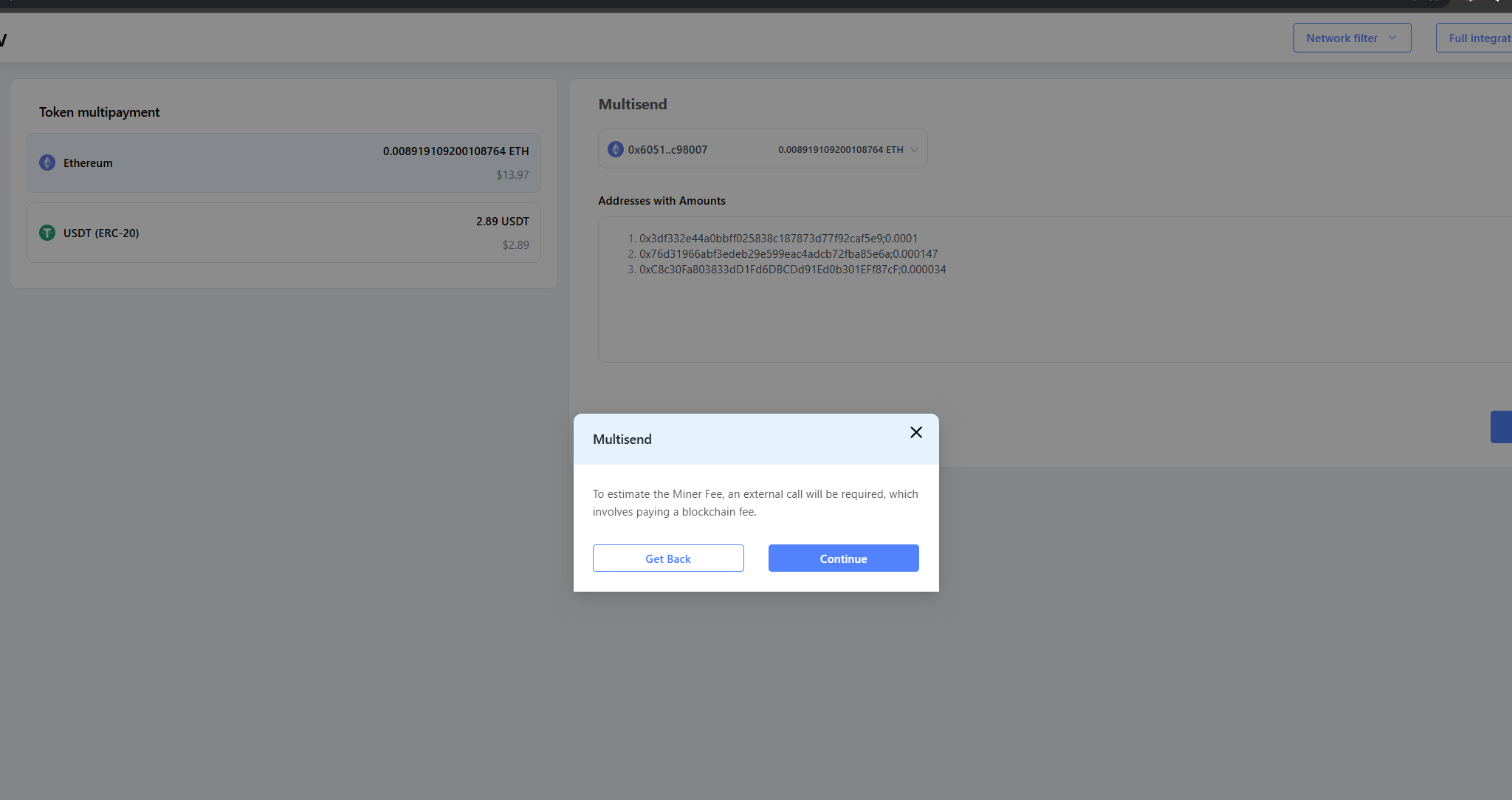
Select Next. To estimate the Miner Fee, the dashboard makes an external call that itself costs a small blockchain fee — confirm with Continue.
Estimating the miner fee requires a blockchain call
4
Review the totals and fees
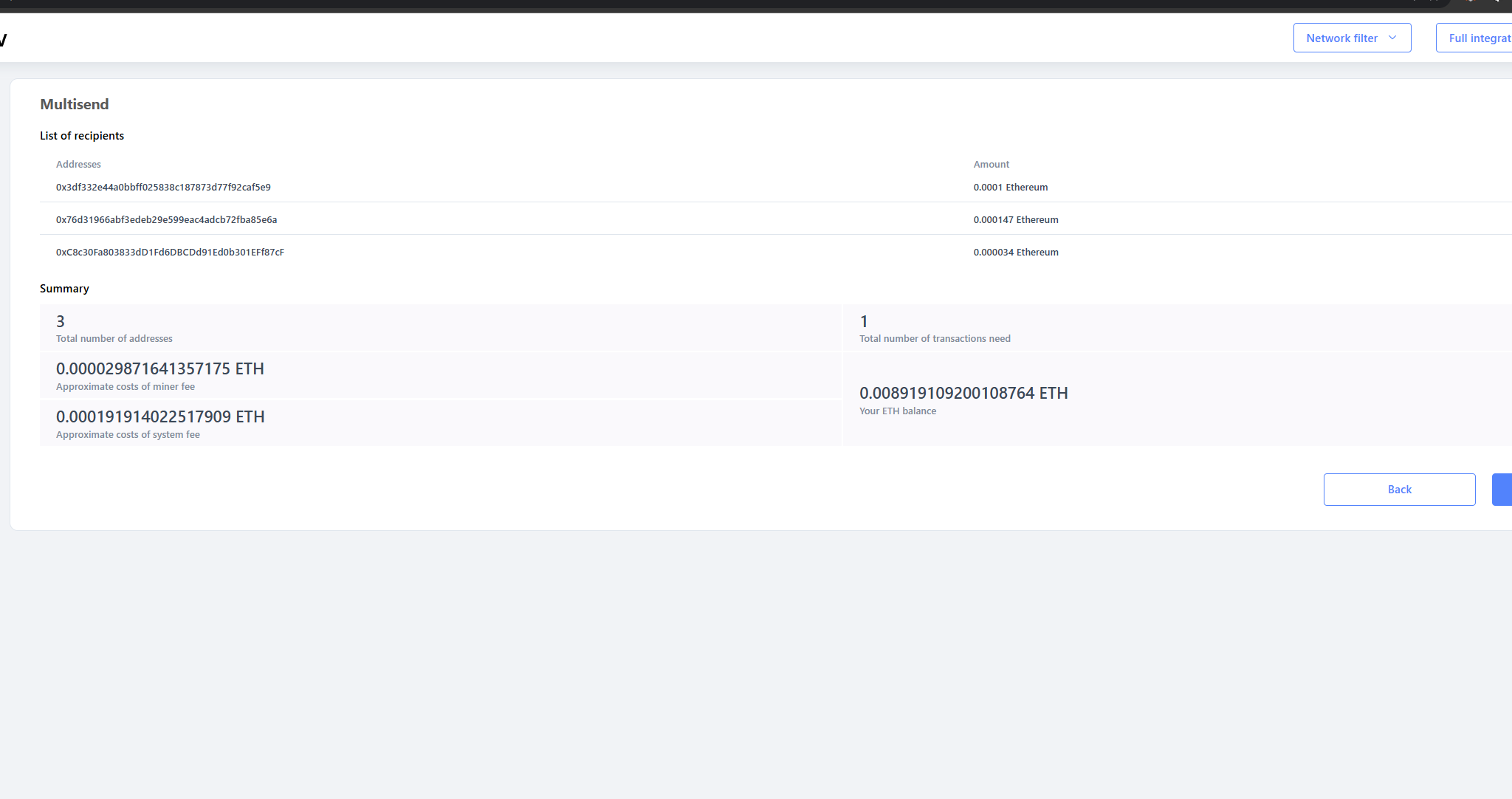
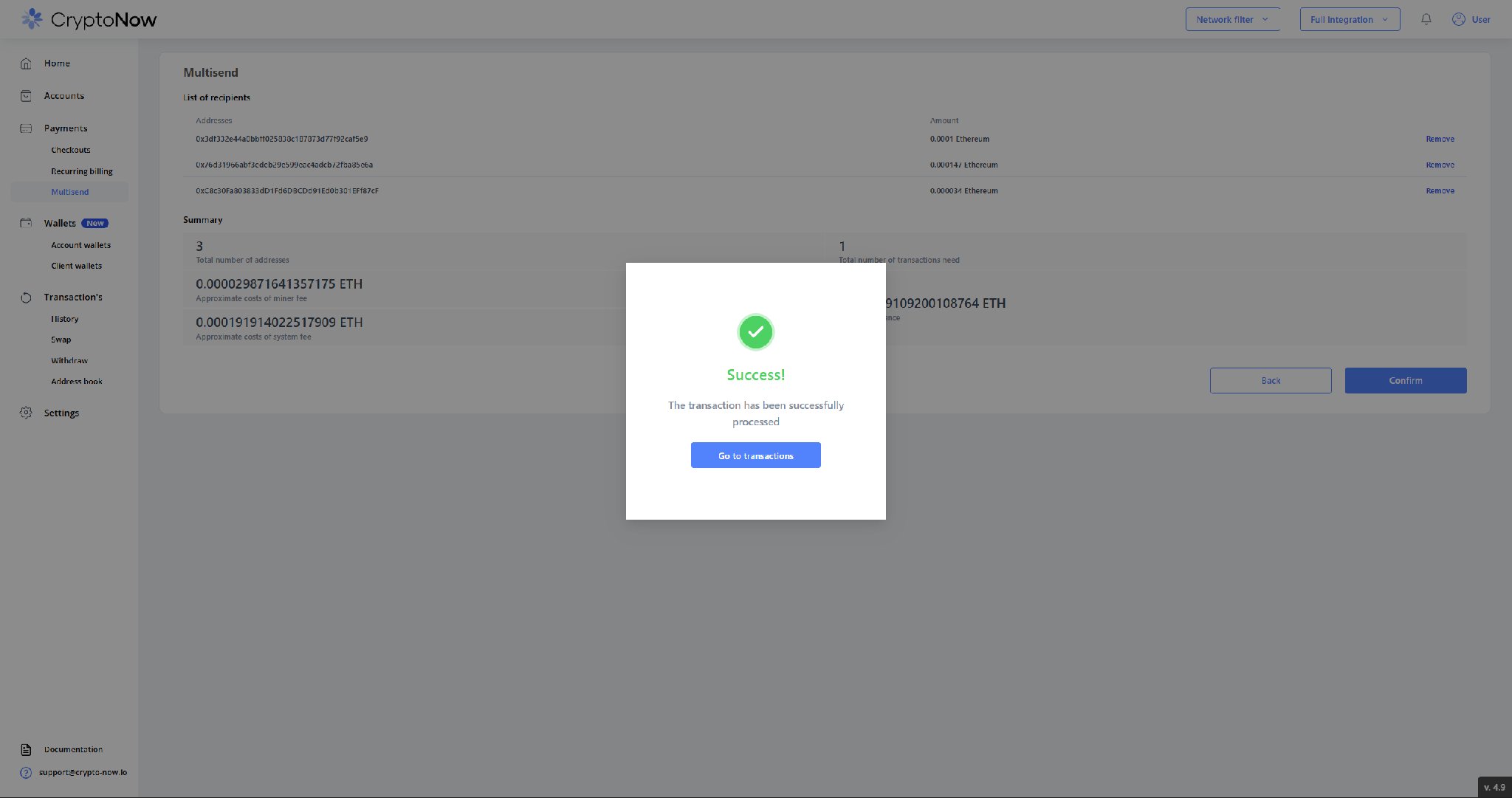
Check the recipient list and the Summary: total addresses, transactions needed, the approximate Miner Fee (network) and System Fee ($0.10 per address), and your balance.
Recipient list with miner fee, system fee and transaction count
5
Send
Select Confirm. You’ll see a confirmation that the transaction was processed.
Multisend processed
6
Track it in Transactions
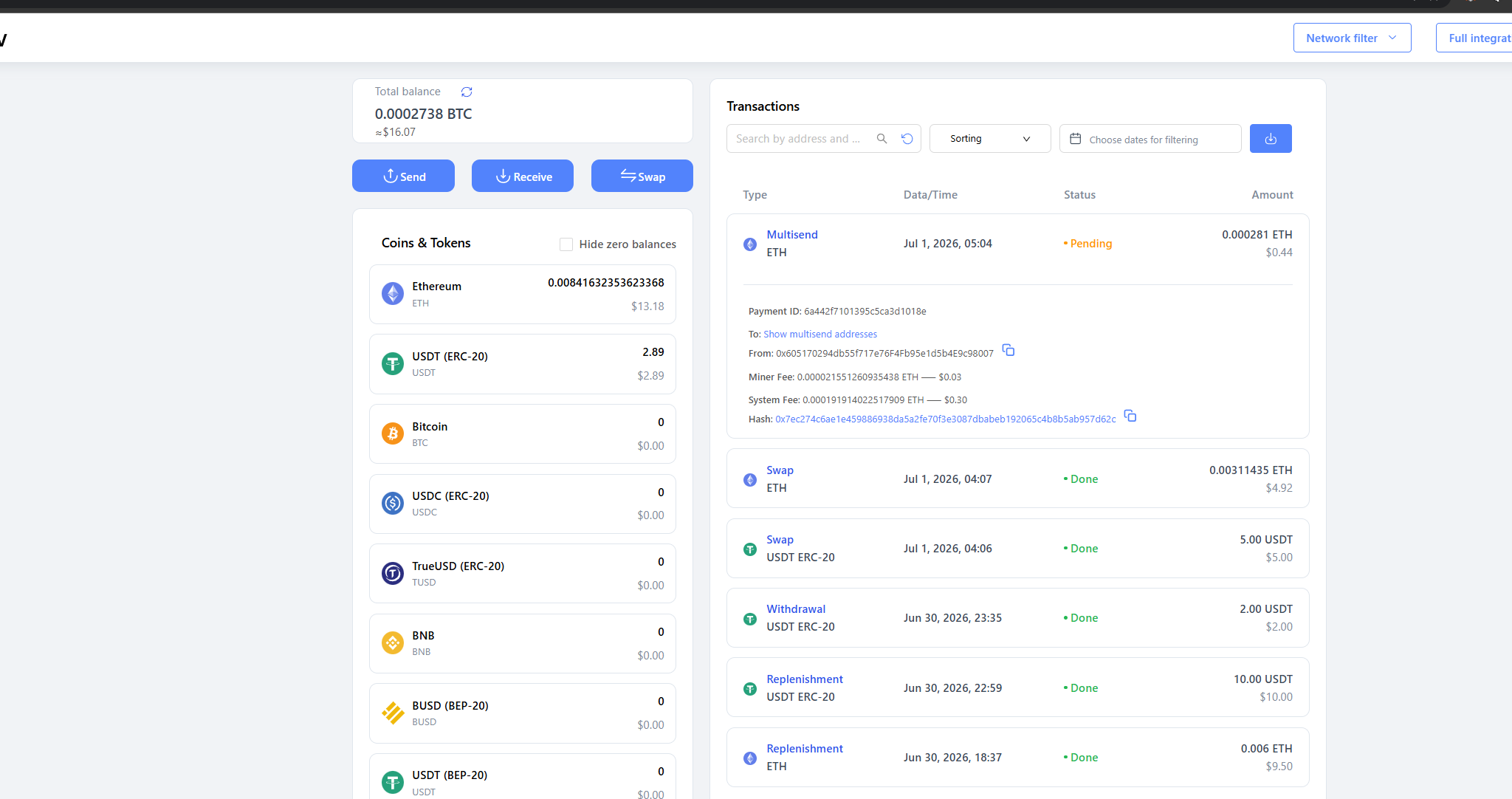
The payout appears in Transaction’s → History as a single Multisend entry, first Pending then Done. Expand it for the Payment ID, Miner Fee, System Fee, and hash; Show multisend addresses lists every recipient.
Multisend in history with fee detail and recipient list
Both fees are paid from the sending wallet’s native coin (ETH, BNB, etc.): a $0.10 System Fee per address plus the network Miner Fee. Make sure the wallet holds enough native coin to cover gas and fees before you send.
Sending an ERC-20 token (USDT, USDC) adds a one-time on-chain approval before the payout, so the contract can move that token on your behalf. Sending a native coin like ETH skips this step.
Worked example. 3 Ethereum recipients settled in 1 transaction. Approximate Miner Fee ≈0.0000299 ETH; System Fee ≈0.000192 ETH (0.30=3×0.10), both drawn from the sending wallet’s ETH.